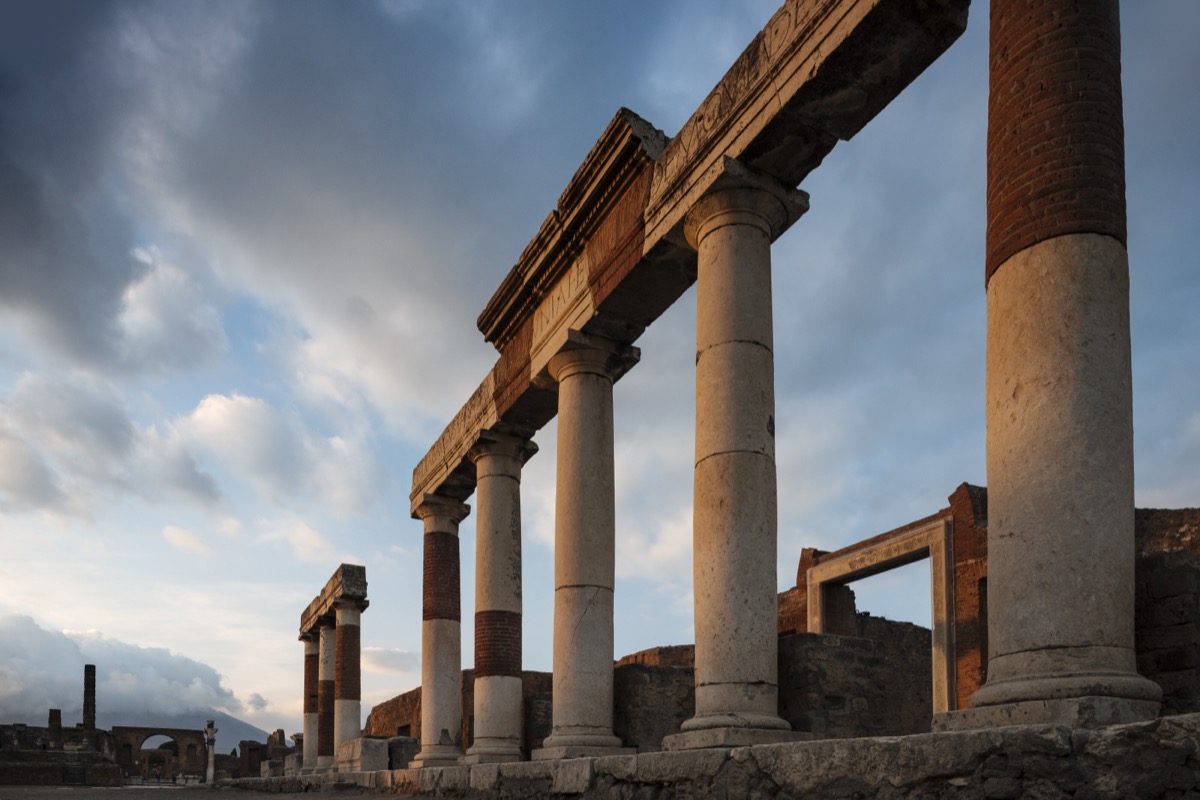
Pompeii Archaeological Discoveries: Major Finds That Rewrote History
Recent years have proved to be among the most significant in Pompeii archaeology, with discoveries that illuminate Roman life, challenge previous assumptions, and reveal new dimensions of the ancient city's tragic final hours. Named among the Top 10 Discoveries by Archaeology Magazine, these finds are reshaping our understanding of Pompeii.
Discover practical tips for your visit in our visitor guide, learn about tickets, and explore the history of Pompeii.
The House of the Thiasus: Dining With Dionysus
A Stunning Rediscovery
In Regio IX, the Archaeological Park of Pompeii unearthed what may be the most spectacular dining room discovered in decades. The House of the Thiasus (Casa del Tiaso) contains a vaulted room opening onto a garden, lined with partially preserved columns painted a rich red that frame extraordinary frescoed wall panels.
The Megalography
What makes this discovery exceptional is the megalography—paintings depicting nearly life-size figures as part of the retinue of Dionysus, the god of wine. This represents a rare example of this artistic technique in domestic Roman settings.
The frescoes show:
- Dionysian procession figures in dynamic poses
- Satyrs and maenads (Bacchic followers)
- Theatrical masks incorporated into the decoration
- Garlands and ritual objects associated with Dionysian worship
Archaeological Significance
Remarkably, 18th-century excavators had stumbled upon this room but largely ignored it. Modern archaeologists are using digital archaeology techniques to reveal what early investigators missed, creating detailed 3D reconstructions that show the room in its original splendor.
The find demonstrates how much of Pompeii remains to be discovered or rediscovered, even in areas previously excavated.
Villa Poppaea: Expanding Our Understanding
Nero's Wife's Palace Grows Larger
Ongoing excavation at the Villa Poppaea (Villa di Poppea) near Pompeii uncovered remarkable new sections of the lavish residence traditionally associated with Poppaea Sabina, wife of Emperor Nero.
The true scale of the "Hall of the Mask and the Peacock" is now revealed as larger and architecturally richer than previously believed, with four new rooms identified bringing the total documented spaces to over 100.
Key Discoveries
The Peahen and Peacock: A complete peahen figure paired with a peacock reveals new insights into Roman decorative tastes and the symbolism of these birds in elite Roman culture.
Theatrical Elements: A theatrical mask depicting Pappus from Atellan comedy shows the connection between Roman domestic decoration and theatrical entertainment.
Apsidal Bath Room: A newly discovered apsidal room connected to the bath complex reveals the architectural ambition and luxury of the villa's bathing facilities.
Roman Concrete Secrets Revealed
A Construction Site Frozen in Time
One of the most scientifically significant discoveries was a construction site left frozen in time by the eruption. Scientists found unfinished walls, piles of premixed dry material, and tools exactly where workers left them in 79 AD.
The Hot Mixing Discovery
The site clarified the ingredients and methods behind Rome's legendary durable, self-healing concrete:
- Hot mixing technique: Romans combined quickite directly with water and volcanic rock/ash
- Exothermic reaction: The chemical process creates heat that improves binding
- Self-healing properties: Lime clasts in the concrete can react with water to seal cracks
This discovery explains why Roman concrete structures have survived for millennia while modern concrete often deteriorates within decades.
The House of Helle and Phrixus: A Family's Final Moments
A Desperate Last Stand
Perhaps the most poignant discovery came from the House of Helle and Phrixus, where archaeologists found evidence of one family's desperate attempt to survive the eruption.
The excavation revealed:
- A family that took refuge in a bedroom
- A bed frame used to barricade the door against volcanic ash
- The remains of four individuals, including a child
The discovery provides heartbreaking insight into the human tragedy behind the archaeological record.
Digital Archaeology: Revealing the "Lost Pompeii"
New Technologies, New Discoveries
Researchers increasingly use digital archaeology to reveal what they call the "Lost Pompeii"—aspects of the city that were documented in earlier excavations but never fully studied or have since deteriorated.
An ancient stone staircase that seemed to lead nowhere led researchers to use 3D modeling and historical records to reconstruct towers and upper-story structures that once existed but are now lost.
These digital techniques are allowing archaeologists to:
- Reconstruct lost features using historical documentation
- Visualize original appearances of weathered frescoes and structures
- Identify patterns across the site that aren't visible on the ground
- Share discoveries with researchers and the public worldwide
Visiting These Discoveries
Most recent discoveries are in areas of active excavation and may have limited public access. However, the Archaeological Park regularly opens newly excavated areas once conservation work is complete.
Planning Your Visit
To see recent discoveries:
- Check the Archaeological Park website for current access information
- Consider guided tours that include newly opened areas
- Visit the Naples Archaeological Museum for artifacts from excavations
- Attend special exhibition events when available
Best times to visit:
- Spring and fall for comfortable weather
- Weekday mornings for smaller crowds
- Consider multi-day visits to fully explore
Current Exhibitions
Artifacts from Pompeii excavations frequently travel to museums worldwide, bringing discoveries to international audiences.
What Future Excavations May Reveal
Excavations continue at Pompeii, with several promising areas under investigation:
- Further exploration of Regio IX
- Continued work at Villa Poppaea
- Investigation of previously unexcavated sections of the city
- Enhanced digital documentation of existing structures
The steady stream of discoveries reminds us that Pompeii, despite 275+ years of excavation, still has secrets to reveal.
Plan Your Pompeii Visit
Ready to see these remarkable discoveries in person? Explore our comprehensive resources:
- Complete Visitor Guide - Everything you need to plan your trip
- Ticket Information - Current prices and booking options
- Getting to Pompeii - Transportation from Naples, Rome, and Sorrento
- Top Attractions - Must-see sites including recent discoveries
- Pompeii vs Herculaneum - Compare both ancient sites